Is a Lowry Hill East Duplex Investment Worth It?
May 21, 2026
May 21, 2026
Wondering whether a duplex in Lowry Hill East is a smart buy? It can be, but this is not the kind of neighborhood where you want to rely on a quick spreadsheet alone. If you are weighing rental income, long-term upside, and the realities of an older Minneapolis property, this guide will help you think through the tradeoffs with more clarity. Let’s dive in.
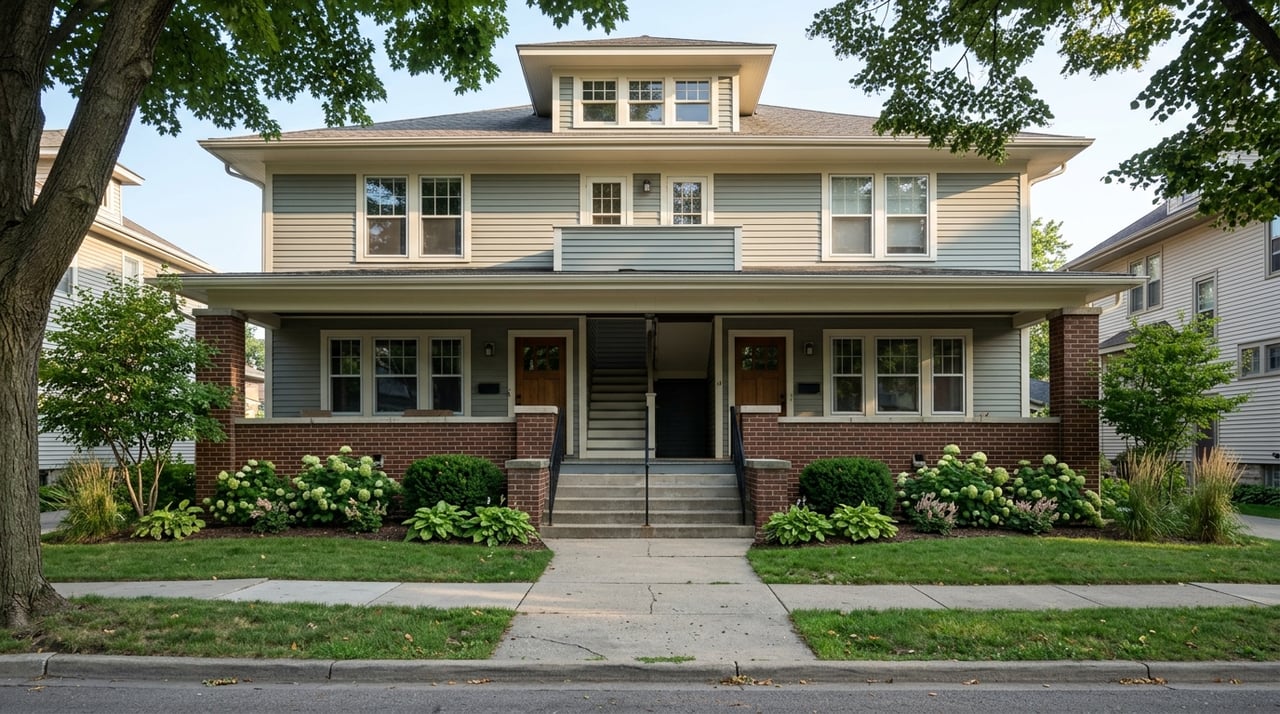
Lowry Hill East has the kind of housing stock many Minneapolis buyers and investors actively seek out. According to the City of Minneapolis, the neighborhood developed during the streetcar era, with most homes in the residential historic district built before 1920. That means you will find a mix of single-family homes, duplexes, and apartment buildings with the scale and architectural details people often associate with classic Minneapolis neighborhoods.
That older housing stock is a big part of the appeal, but location is just as important. The City identifies the Hennepin-Lyndale corridor as a key transit corridor, with about 3,000 riders moving through it each weekday on Routes 4 and 6, and the Midtown Greenway directly serves the neighborhood as the city’s busiest bike trail. For a duplex owner, that supports a practical demand story tied to access, mobility, and daily convenience.
If you are buying a duplex here, the strongest investment case is usually not “cheap entry, easy renovation, instant cash flow.” Instead, it is often a combination of location, limited small multi-family supply, and long-term renter and owner-occupant appeal. This can make Lowry Hill East especially attractive if you want a well-located property with character and are comfortable taking a longer view.
The neighborhood also fits a certain type of buyer very well. If you plan to owner-occupy one unit and rent the other, Lowry Hill East can offer a compelling mix of lifestyle and income. It can also work for patient investors who value stable demand and neighborhood strength more than squeezing every possible point of yield out of the first year.
Lowry Hill East is full of older buildings, and older buildings come with a different set of numbers. City historic-district guidance highlights features like original wood siding, open front porches, steep rooflines, divided-light windows, and detached garages off alleys. Those details add charm, but they also shape what repairs and upgrades may look like.
In practical terms, your budget should go beyond cosmetic updates. Market examples from nearby Minneapolis multi-family listings show common big-ticket items such as roofs, siding, windows, wiring, plumbing, furnaces or boilers, kitchens, baths, and parking improvements. For a duplex in this part of Minneapolis, the value-add opportunity is often in the building envelope and systems rather than paint colors alone.
There is another due diligence item worth flagging. The City says Lowry Hill East is included in Minneapolis lead service line replacement work, so water service infrastructure should be part of your inspection and review process. On an older duplex, small surprises can add up fast if you do not identify them early.
Not every buyer realizes how much preservation standards can affect rehab plans. In the designated historic district, the City’s guidelines say vinyl siding and vinyl replacement windows are not appropriate, open porches should remain open, and foundation materials should be preserved or matched carefully. That matters because repair scope and material choices can directly affect your timeline and costs.
This does not make a duplex here a bad investment. It just means you need a plan that respects the property’s construction and setting. Buyers who do best in this neighborhood usually go in knowing that stewardship and budgeting are part of the investment equation.
When you analyze income potential, it helps to separate citywide benchmarks from neighborhood snapshots. HousingLink’s July 2025 Minneapolis Rental Housing Brief reports median rents of $1,130 for one-bedroom units, $1,570 for two-bedroom units, and $1,950 for three-bedroom units across Minneapolis. Those numbers create a useful baseline for underwriting.
Neighborhood-level rent data in Lowry Hill East varies by source. Realtor.com reported a median neighborhood rent of $1,572 per month in April 2026, while Zumper’s rolling 30-day snapshot in May 2026 put the median at $1,249, with one-bedroom apartments averaging $1,145 and two-bedroom apartments averaging $1,375. That gap is best understood as a difference in methodology and timing, not necessarily a contradiction.
Current advertised duplex-style units in the neighborhood suggest that updated character spaces can perform above broad neighborhood medians. Reported examples include two-bedroom units listed at $1,700, $1,750, and $1,895, plus a four-bedroom upper duplex at $2,200. If a duplex has strong upkeep, appealing finishes, and a layout renters want, it may command stronger pricing than a rough average implies.
Vacancy matters because it affects both pricing power and risk. HousingLink reported Minneapolis vacancy at around 5% in July 2025. The Federal Reserve Bank of Minneapolis also noted that citywide rental vacancy stood at 6.7% in January 2025, down from a pandemic-era peak of 9.5% in October 2020.
There is not a standard public vacancy series for Lowry Hill East itself, so citywide data is the most defensible reference point. In plain English, the broader Minneapolis rental market appears to have stabilized compared with the shock of 2020. For a Lowry Hill East duplex owner, that supports a more balanced, less volatile demand picture than many buyers feared a few years ago.
Lowry Hill East is not the cheapest place to buy a small multi-family property in Minneapolis. Current market examples show a median multi-family listing price of about $515,000 in Lowry Hill East, compared with about $402,000 in Longfellow, $480,000 in Whittier, and $569,000 in South Uptown. That places Lowry Hill East in a middle-to-upper range for acquisition cost among comparable Minneapolis neighborhoods.
Days on market also tell an interesting story. Current examples show about 94 median days on market for multi-family listings in Lowry Hill East, versus 27 in Longfellow, 46 in Whittier, and 26 in South Uptown. That can suggest a more selective buyer pool, more pricing friction, or simply a smaller and more nuanced niche for these properties.
On the rent side, nearby neighborhood medians include about $1,410 in Longfellow, $1,100 in Whittier, $1,414 in Uptown, and $1,470 in Lyn Lake. Put together, those figures suggest Lowry Hill East is often less about bargain hunting and more about paying for a location and housing type that many renters and owner-occupants consistently value.
A duplex in Lowry Hill East can be a smart investment if the building already has solid systems, strong maintenance history, and a floor plan that fits local rental demand. It can also make sense if you are buying with a long-term hold strategy and want a property in a neighborhood where transit, bike access, and historic housing stock support ongoing interest.
This neighborhood can be especially compelling for owner-occupants. Living in one unit while collecting rent from the other can make the economics easier to justify, particularly if you personally value the architecture, location, and day-to-day convenience of the area. In that setup, some of the return comes from lifestyle fit as well as income.
Not every duplex in Lowry Hill East is a smart buy. The weakest candidate is usually a building that needs major exterior work, mechanical updates, and historic-compatible repairs all at once. If the roof, windows, siding, plumbing, electrical, and porch all need attention, your renovation budget can escalate quickly.
You also want to be careful if you are buying purely for immediate cash flow. Lower-cost neighborhoods may offer an easier entry point if your main goal is monthly yield rather than long-term neighborhood strength. In Lowry Hill East, mistakes in rehab scope or acquisition price can be hard to overcome.
If you are evaluating a Lowry Hill East duplex, focus on a few big questions:
Those questions matter more here than a simple price-per-unit comparison. In an older neighborhood with character housing, the details of condition and stewardship can have an outsized impact on returns.
So, is a duplex in Lowry Hill East a smart investment? In many cases, yes, especially if you value long-term hold potential, neighborhood appeal, and the scarcity of small multi-family properties in an established Minneapolis location. But it is usually not the easiest pure cash-flow play, and success depends heavily on condition, rehab planning, and purchase price discipline.
If you want help evaluating a specific duplex, comparing it with nearby neighborhoods, or thinking through rehab realities in a historic Minneapolis housing stock, Erin Sjoquist can help you look past the listing photos and make a more confident decision.
July 16, 2026
July 2, 2026

June 18, 2026
June 4, 2026
May 21, 2026
May 7, 2026

April 16, 2026
April 2, 2026
March 24, 2026
Real estate isn’t just about properties — it’s about people, goals, and dreams. I approach every transaction with heart, strategy, and a commitment to achieving the best possible outcome for my clients. Whether you’re navigating a life change or seizing an investment opportunity, I’m here to make it simple, seamless, and successful.
GET IN TOUCH WITH ERIN
ERIN SJÖQUIST
1350 Lagoon Ave Ste 900 Minneapolis MN 55408